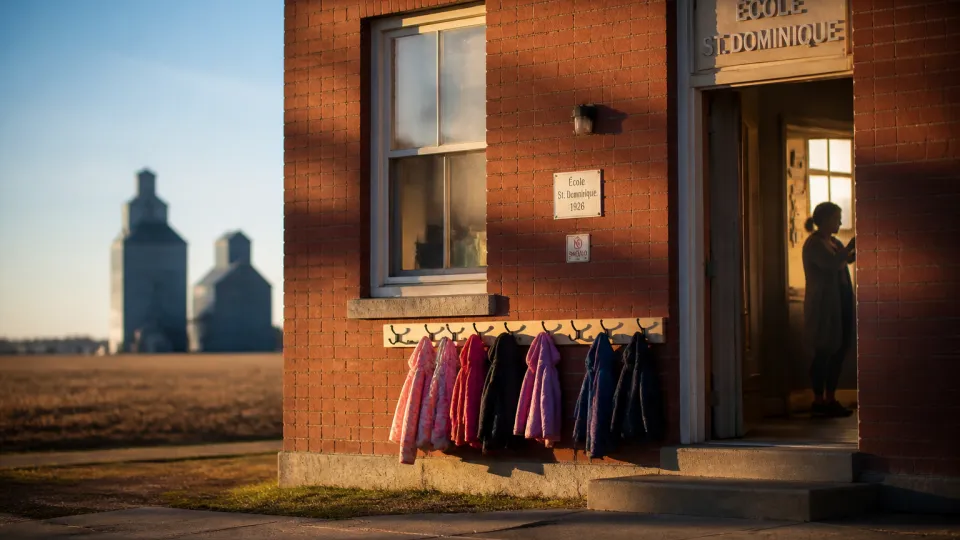
On a late autumn afternoon a few blocks from Brandon's downtown, the light slips along the windows of a modest brick school. Its façade is familiar: tall windows, a flagpole, a weathered bench where parents wait. Inside, there is a wall of photographs — grainy black-and-white images of children in knickers and wool coats, a teacher at the slate board, a small hand raising a question. Those images trace a story that is as much about place as pedagogy: how a region stitched itself together through classrooms, curriculum and communal commitment.
The history of education in Westman is neither linear nor tidy. It begins with settlers carving farms from prairie, establishing one-room schools that performed double duty — academic center, town hall, occasional theatre and court of judgment. Teaching in those early schools demanded practicality. A single teacher might instruct children aged five to sixteen, oversee the schoolyard games, and sometimes help mend a classroom roof. That relentlessness forged a kind of curricular pragmatism: literacy and numeracy, of course, but also an emphasis on agriculture, homemaking and trades that reflected daily life.
As roads improved and populations shifted through the twentieth century, consolidation remade the landscape. Rural one-room schools were closed, and students were bused to centralized schools in towns like Brandon. Consolidation brought better-resourced classrooms and specialized teachers, but it also distanced education from the intimate rhythms of farm life. For many older residents the loss of the local school was keenly emotional. One retired teacher I spoke with remembered arriving at dawn to stoke the wood stove, and later watching former pupils return as parents with their own children. 'You knew everyone,' she said. 'The school was family.'
Parallel to that local evolution was the emergence of post-secondary institutions that anchored a new chapter. Brandon's colleges and technical institutes — the local community college and the university downtown — changed both expectations and opportunity. They expanded access to professional training, from nursing and social work to agri-business and the trades, and they became magnet institutions where ideas met local needs. Faculty increasingly turned attention to region-specific research: prairie ecosystems, rural health delivery, pedagogical practices for small communities. Students from neighbouring towns and First Nations came to study, then returned home with skills that reshaped schools, clinics and businesses.
The human element in this history is essential. Teachers who transplanted to Westman from other provinces, students who navigated long bus rides and part-time work, Indigenous families negotiating curricula shaped by colonial histories — their stories complicate any nostalgic account. In recent decades, educators and Indigenous leaders have worked to reframe learning with more culturally responsive approaches, integrating local languages, histories and land-based knowledge into classrooms. Those efforts insist that education here must reckon with past exclusions to be meaningful in the present.
Today Westman faces both enduring challenges and new openings. Rural depopulation, uneven broadband access and the fragility of funding for small programs are daily realities. At the same time, technological diffusion — online classrooms, blended learning platforms and micro-credentialing — offers tools to revive localized, flexible education. A farmhouse student can now participate in a university seminar, while a trades apprentice can access specialized online modules that complement hands-on instruction.
Community partnerships have become a crucial mechanism for sustaining education. Schools collaborate with health services for integrated support, with local farms for curriculum tied to food systems, and with cultural centres to deepen heritage education. One innovative program pairs high-school students with elderly residents to document oral histories: students gain research skills and mentoring experience, while elders see their knowledge preserved and honored. That reciprocal model echoes the prairie ethic of mutual reliance.
Looking forward, Westman’s schools must balance the practical and the philosophical. Communities here value vocational competence and pragmatic outcomes — graduates who can fix a combine, manage a clinic, teach the next generation. But they also benefit when education fosters civic imagination: the capacity to ask why existing systems function as they do, and how they might be rearranged for a fairer future. Investments that expand broadband, sustain small-class supports and fund culturally grounded curricula will be central to that balance.
In the end, the region’s educational story is not merely a record of buildings erected and abolished. It is a ledger of relationships: between students and mentors, towns and fields, past and future. The photographs on the brick-school wall capture more than faces; they capture an ethic — that learning in Westman has always been as much about tending to one another as it is about accumulating information. If that ethic endures, the region’s schools will continue to be places where practical skills and civic care meet, where the next generation learns not just what to do, but how to belong.