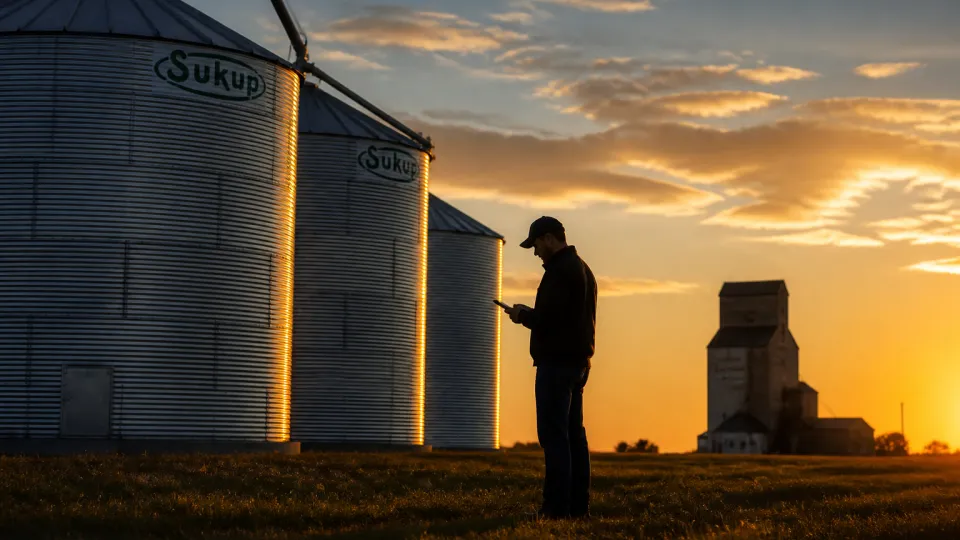
The sound is not only the diesel of a combine; it is the steady pulse of servers, sensors, and satellite guidance—modern machinery that traces its roots through a century of trial, failure, and incremental genius. In Westman, the arc of agricultural is not a sterile tale of efficiency gains. It is a story of communities remaking themselves around the land, altering rhythms of work, kinship, and local economies.
For generations, the region’s innovations grew from necessity. Early settlers learned fast that the prairie demanded new solutions: shelterbelts to break wind, rotations to restore thin soils, and cooperative grain-handling to reach markets. Those small, often improvisational changes laid a foundation for larger, provincial and national breakthroughs that would ripple back into communities like Brandon, Neepawa, and Virden.
One of the most consequential transformations began in plant genetics. The crop now synonymous with the Canadian Prairies—the oilseed we know as canola—was not an accident but the product of decades of breeding and research across the Prairies. Breeders focused on lowering undesirable compounds in rapeseed and increasing oil quality; the result reshaped farm rotations and opened new markets for Western Canadian growers. On fields around Brandon, canola became a reliable cash crop that supported machinery investments, better seed, and, crucially, a willingness to experiment.
Parallel to genetic advances was a quieter revolution underfoot: soil conservation. The adoption of reduced-tillage and zero‑till systems, which began to spread in Manitoba in the 1970s and 1980s, transformed how farmers thought about risk and stewardship. Instead of turning the soil each spring, many farmers learned to sow into residue, letting organic matter build and moisture persist through dry springs. This was not the product of a single research paper but of dialogue among farmers, extension agents, and researchers—an iterative social as much as a set of implements.
Brandon’s research institutions and extension services acted as connective tissue in these evolutions. Local experiment stations tested varieties and practices suited to short growing seasons and fluctuating moisture. In the field, farmers adapted recommendations to their microclimates. That iterative exchange—researchers in labs and farmers in pickup trucks—kept innovations locally relevant.
Yet innovation has social costs. Centralization of grain handling and the demise of the wooden elevators that once punctuated small towns altered local identities. Where an elevator had been a place to gossip, check prices, and trade labor, consolidated terminals moved commerce away from Main Street. Consolidation brought efficiency and lowered costs for some growers, but it also hollowed the social scaffolding of many rural towns. In response, communities repurposed spaces—grain elevators became museums, community halls, even art spaces—small acts of cultural preservation amid economic change.
Technology in the 21st century accelerated both the promise and the tension. GPS-guided tractors, variable-rate seeding, and on-farm sensors offered unparalleled precision, reducing inputs and increasing yields. Data platforms promised optimization at field-scale—and new vulnerabilities. Who owns the data streaming from a seeder? How are decisions made when an algorithm recommends a seed mix? These are not abstract questions for Westman; they influence contracts, bankability, and intergenerational transfers of land.
The human face of these shifts is revealing. A third-generation farmer south of Brandon described the change not in bushels but in mornings: "My grandpa started before daylight, by the time I ride out it's daylight and the tractor steers itself. But the decision-making hasn't gotten easier—it's louder, with emails and alerts and more moving parts." Such remarks capture the mixture of relief and overload that technological adoption can create.
Looking forward, the most consequential innovations in Westman may be social rather than technical. Climate variability presses farmers to diversify crop mixes, invest in soil health, and collaborate across watersheds. Local cooperatives and community-led projects—seed-cleaning enterprises, pulse processing, and soil-carbon pilot programs—signal a renewed emphasis on adding value locally rather than merely exporting raw commodities.
Young people returning to family farms, or starting new enterprises, often cite purpose as much as profit. They see agriculture as a place to apply data literacy, regenerative practices, and community . That synthesis—of respect for generational knowledge and acceptance of new tools—offers a durable model for resilient rural life.
Westman’s history of agricultural innovation is not a tidy narrative of progress. It is a layered story of people adapting to soil and weather, of scientists and farmers arguing into the night over a test plot, of towns losing elevators and finding new purposes. The lessons are practical and moral: technological advances matter, but so do the institutions and daily rituals that turn innovation into community benefit. If the next great leap in prairie agriculture is to be equitable and enduring, it will hinge on sustaining those social architectures as much as on perfecting the hardware and the seed.