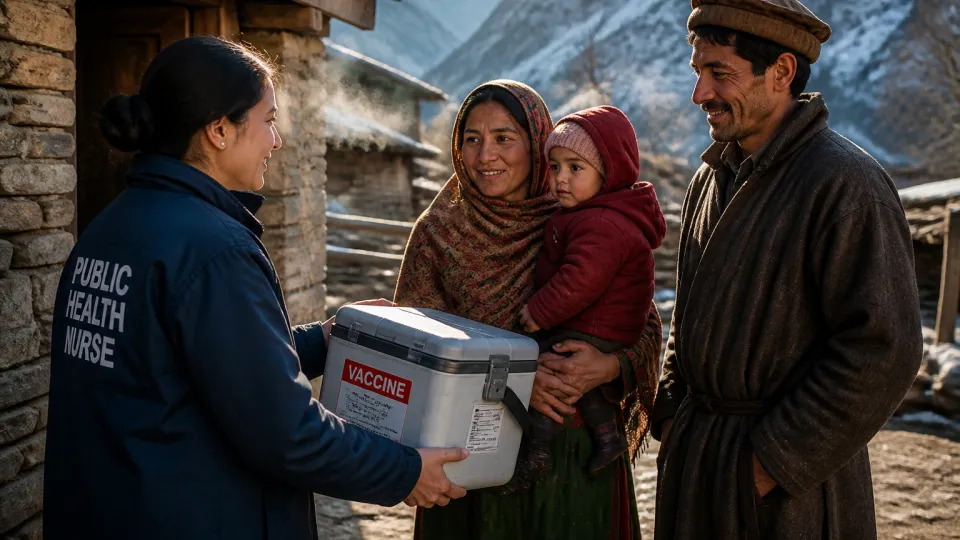
In late winter light, a small pickup slides down a gravel lane outside Brandon, its box filled with insulated vaccine crates and folders. Evelyn, a public health nurse who has worked in the region for three decades, parks at the end of a long driveway and walks a patient’s son through the instructions for home oxygen. It is a domestic scene that, in miniature, maps the larger story of healthcare in Westman: not only institutions and budgets, but improvisation, trust, and an insistence that care arrive where people are.
The history of healthcare in Westman is less a single arc than a braid of initiatives: home visiting programs, community paramedicine, Indigenous-led clinics, volunteer-run mental health supports, and the expansion of telemedicine. Each strand grew from specific local challenges. Rural distances made every hospital visit costly; tight-knit communities made informal caregiving both possible and necessary. When resources were scarce, people repurposed school gyms into screening clinics and church basements into vaccine sites. Those ad hoc measures, over time, hardened into formal programs and new expectations about who delivers care.
Consider community paramedicine, a program that emerged as an answer to repeated, preventable emergency calls. Instead of rerouting people to the emergency room, paramedics were trained to treat chronic conditions at home, coordinate follow-up with primary care, and liaise with social services. Daniel, a retired cattle farmer with COPD, remembers a time when each flare meant a 150-kilometre round trip to the ER. After enrolling in a community paramedicine program, he had a paramedic visit weekly, manage medications, and arrange for pulmonary physiotherapy in Brandon. 'They kept me at home when I needed it most,' he says. 'I didn’t feel like a number getting shipped around.'
Indigenous-led health initiatives introduced another crucial dimension: cultural safety. For First Nations and Métis people in the region, healthcare encounters have too often been fraught with misunderstanding and exclusion. In response, communities established local clinics and programs that place Indigenous knowledge and leadership at the center of care. Those initiatives are not merely symbolic; they restructure care pathways to include traditional healers, create community-based mental health supports, and ensure Indigenous languages and customs are respected in clinical encounters.
Training and workforce development have been central to sustaining these innovations. Institutions such as local colleges partnered with hospitals and community organizations to train practical nurses, paramedics, and community health workers who plan to live and work in Westman. Programs emphasize rural practice, continuity of care, and interprofessional cooperation so that a nurse in a small town can consult a specialist in Brandon by video conferencing and still feel equipped to manage complex conditions locally.
The COVID-19 pandemic was an accelerant. Overnight, telemedicine moved from occasional convenience to a core part of care. Virtual consults reduced travel burdens for oncology follow-ups and mental health appointments and allowed specialists in larger centres to maintain continuity with rural patients. Simultaneously, the pandemic revealed gaps — broadband limitations, privacy concerns in shared housing, and the digital literacy divide — that community groups scrambled to address with device lending, online tutorials, and local access points.
What matters across these initiatives is not just but relationships. Volunteers who turned out for mass vaccination clinics were often the same people who staffed meal deliveries and checked on isolated seniors. Local nonprofits, municipal planners, health professionals, and elders convened around kitchen tables and municipal halls to resolve logistics. Those collaborations are the invisible infrastructure that keeps programs responsive when budgets tighten.
Looking forward, Westman faces familiar tensions: recruiting and retaining providers, securing stable funding for integrated community programs, and adapting to demographic shifts and climate-related health threats. Yet the region also holds advantages. The experience of building services through networks of mutual aid creates institutional agility. The lessons of cultural safety and Indigenous leadership offer models for more humane, effective care. And the hard-won capacity for rapid adaptation — seen during mass vaccination campaigns and telehealth rollouts — can be harnessed for chronic disease prevention and mental health crises.
'The work here has always been about more than bandages and prescriptions,' Evelyn reflects. 'It's about being invited into people's lives and building systems that keep them safe where they are.' That statement reframes success. It is not measured only in hospital statistics but in afternoons saved, in small triumphs over isolation, in a farmer breathing easier because a paramedic made a house call. The future of healthcare in Westman will depend on sustaining those relationships and translating local ingenuity into lasting structures — not by imposing a one-size-fits-all model, but by listening to communities and funding the people and partnerships that already do the work.
If there is a through-line to the region's history, it is that healthcare here has always been a community craft: improvised, human, and relentlessly practical. The challenge now is to keep those human practices from being treated as emergency improvisation and to ensure they are the foundation of resilient, equitable care for generations to come.