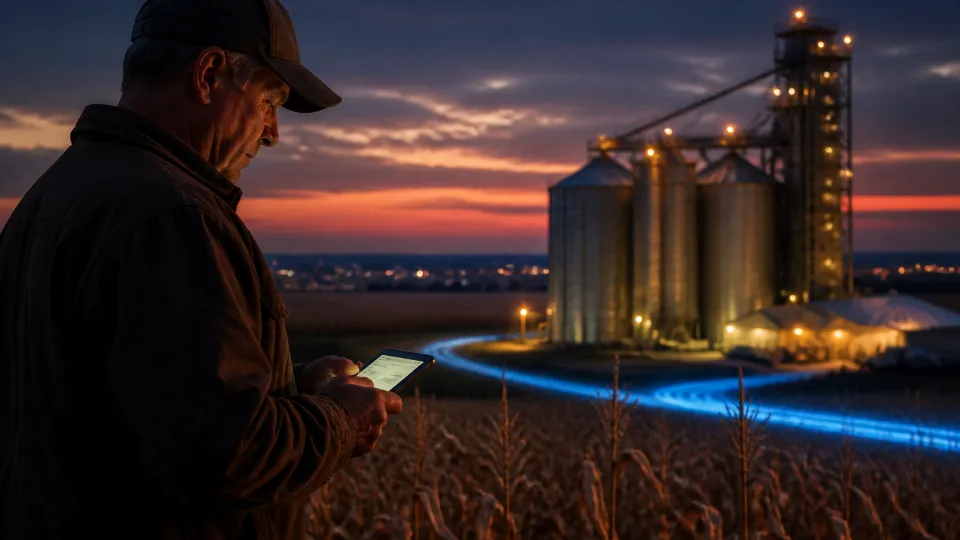
On a late‑April morning, the grain elevator outside a small Westman town hummed with an ordinary mechanical life: belts, gears and the low conversation of men and women who have moved grain for decades. Against that sound, a farmer in his sixties tapped at a bright tablet, scrolling through a soil‑moisture map pulled from a sensor in a field 20 kilometres away.
It is an image that would have seemed fanciful a generation ago: the prairie, a landscape associated with heft and weather and long distances, now layered with invisible signals and new routines. But that blend of old and new is precisely what residents here describe when they talk about adoption — not flashy disruption, but a pragmatic redesign of how life gets done.
The technical improvements are visible in municipal reports and provincial funding announcements: new cellular towers, community Wi‑Fi nodes, and federal support from national broadband programs that have prioritized last‑mile connections. For households and businesses, though, the change is measured in how they rearrange minutes and choices.
Take telehealth at the Brandon Regional Health Centre. Long before the pandemic prompted mass adoption, clinicians had experimented with remote consultations to reach distant patients. Now, nurses coordinate virtual follow‑ups for elders who otherwise face an hour’s commute each way. A care coordinator described the difference: being able to check a wound via video or monitor medication adherence over a call often means a patient avoids an emergency room trip. The technology does not replace the hospital; it extends it into living rooms and kitchens.
The human calculus plays out differently on the family farm. Precision agriculture tools — GPS guidance systems, variable‑rate seeding, and drones for crop scouting — have reduced guesswork in fields where margins are thin. One mid‑career farmer explained how a networked flow meter saved an expensive fertilizer application by revealing a blockage he would not have seen until harvest. That savings keeps a crew employed and a small machine shop running in town. Farmers talk openly about skepticism turned to acceptance: the first seasons are trial and error, but data that translates into fewer trips to the co‑op or more efficient fuel use becomes convincing in cold, practical terms.
For entrepreneurs and shops clustered around downtown Brandon and smaller main streets, digital tools have been less about grand transformation than about survival and opportunity. A bakery now offers online ordering and scheduled pickups to avoid waste. A local mechanic uses a cloud booking system to manage seasonal spikes in workload. Youthful coders from Brandon University and technical programs collaborate with retailers to build simple websites and point‑of‑sale integrations. These are small innovations with outsized community impact: they keep money circulating locally and make it easier for residents who cannot travel to access goods and services.
Community learning has become the linchpin of adoption. Public libraries, seniors’ centres and high school classrooms host drop‑in clinics for everything from password hygiene to videoconference etiquette. At a recent evening session, a roomful of seniors leaned toward laptops as an instructor showed how to join a virtual medical appointment. The mood was not technophilic zeal but relief: technology that reduces time spent waiting in cold clinic parking lots is welcomed on its merits.
Adoption is not uniform and the work ahead is practical and political. Affordability remains a barrier for some families, and reliable maintenance of infrastructure in extreme weather is an ongoing concern on the plains. There are also cultural questions — who controls data gathered from fields, and whether algorithms used for farm loans or insurance will understand the contingencies of prairie agriculture. Leaders across municipalities speak now not of inevitability but of stewardship: how to negotiate contracts, protect privacy, and keep training local.
Yet the prevailing sentiment among those interviewed for this piece was quietly optimistic. Technology, in these accounts, is less an endpoint than a resource that can be bent toward community priorities. It helps retain young people who expect connectivity, it eases caregiving burdens for aging families, and it creates space for local businesses to compete without leaving town.
The future here will be iterative. Expect more hybrid solutions: mobile clinics coordinated through apps, classroom projects where students help map local infrastructure, and farmer cooperatives that share data‑analysis tools rather than selling them off to distant firms. The challenge will be keeping the agency of townsfolk at the centre of that evolution.
On that April morning back by the elevator, the farmer closed his tablet and watched the elevator unload with a small satisfied grin. The technology had done its job — it had given him a clearer picture of the season and, in doing so, preserved the routines and relationships that make small towns resilient. For communities across Westman, that practical balance between tradition and ingenuity may be the truest measure of progress.