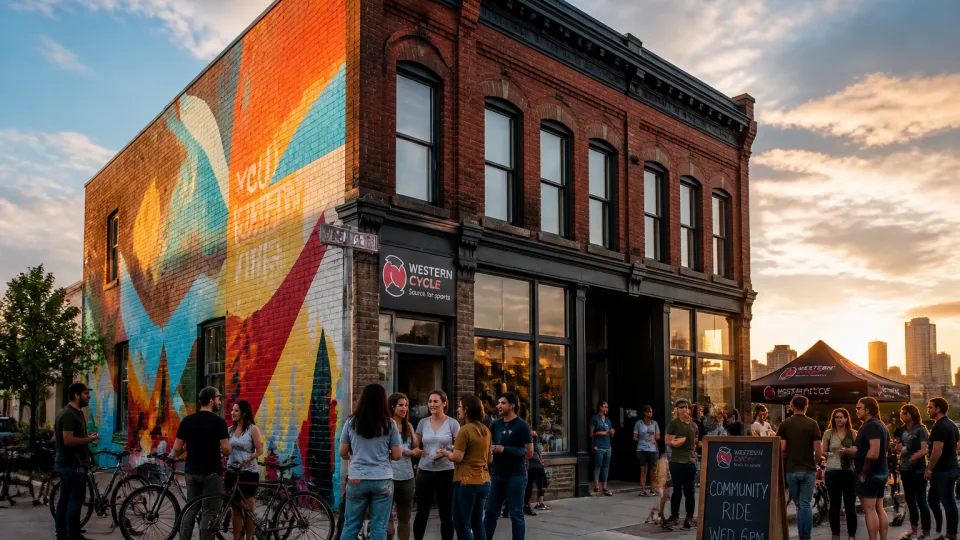
On a crisp spring evening in downtown Brandon, a small crowd gathered under the glow of string lights in what until recently was a storefront long shuttered. Children ran between wooden planters, elders lingered on refurbished benches, and a mural—painted over weeks by neighbours—caught the last light. It was not a grand opening or an announced municipal plan but a neighborhood rehearsal for the future: a patchwork solution to the region’s most persistent challenge, turning underused places into sites of exchange, work and cultural life.
The Westman region has long been framed by its agricultural hinterland and the practical rhythms of a service hub. Lately, however, a quieter narrative has been taking shape: a collection of modest projects and municipal investments that, taken together, amount to a shifting civic imagination. What looks like small-scale tinkering in Brandon, Virden and the smaller towns beyond is producing tangible effects on daily life—on how people meet, make, and imagine staying.
Take the slow conversion of heritage storefronts along Brandon’s older commercial corridors. Rather than demolishing these façades for parking or chain retail, local entrepreneurs and a handful of nonprofits have refurbished them into co-working spaces, gallery rooms and pop-up retail for craftspeople. These are not glitzy redevelopments but careful, often volunteer-driven renovations that respect the woodwork and the grain of place. A barista-turned-social-enterprise director described it this way: 'We wanted a place where people could drop in, leave a resume, see an exhibition and meet someone from the trades. That sounds humble, but it changes how a downtown feels at 4 p.m.'
Across the region land trusts and cooperative ownership models are also gaining traction as tools to stabilize housing and commercial rents. In one mid-size town, a co-op formed by teachers and local small owners purchased a former hardware store and converted it into mixed-use space. The second-floor apartments are affordable units tied to local employment; the street-level hosts a cooperative café and a shared tool library. Projects like this do not eliminate systemic pressures, but they create breathing room for local commerce and for young families hesitant about leaving the region.
Another strand of development is cultural activation. Indigenous artists, immigrant collectives and long-established prairie cultural groups have been finding ways to share space and audience. A recurring practice—pop-up gatherings that integrate traditional music, storytelling and contemporary art—has proven unexpectedly powerful in attracting cross-generational attendance. One Indigenous artist explained, 'When we place our stories in the centre of town, people who would not ordinarily cross a reservation line come to listen. That presence shifts relationships.' These cultural moments serve both as community-building and as a soft form of economic development, bringing visitors and small purchases to local vendors.
Municipal policy is responding, in fits and starts. Bike lanes, improved transit scheduling, and small grants for façade improvement are modest but consequential investments. Where large-scale industrial announcements make headlines, these quieter decisions—public benches, winter ploughing of bike routes, grants for cultural festivals—alter the texture of everyday life and influence retention. Young people contemplating whether to remain or return after studies weigh these quotidian amenities more heavily than had been commonly acknowledged.
The human constellations behind these changes are heterogeneous: a retired carpenter volunteering on a heritage restoration board; high school grads starting design shops out of their kitchens; municipal planners negotiating with private landlords. Their work is less about headline-grabbing construction and more about the slow accretion of trust and capacity. 'It’s the relationships that matter,' said a community organizer who has run participatory planning sessions across the region. 'Policy opens a door, but people walk through it together.'
Looking forward, Westman faces structural questions—labour market shifts, climate resilience for farm communities, and equitable reconciliation with Indigenous nations. Development that endures will likely weave those questions into the fabric of local projects, not treat them as add-ons. That means design standards that account for flood resilience, cultural protocols embedded in festival funding, and apprenticeship pipelines tied to new construction and heritage conservation.
The Westman story is therefore less a single transformation than a cumulative one: dozens of incremental acts, each anchored by local knowledge and relationships, that together redirect a region’s trajectory. What is most striking is less the scale of any one initiative than the coherence that emerges when economic, cultural and civic work are allowed to overlap. In the glowing dusk of Brandon’s reanimated corners, that coherence feels less like planning doctrine and more like a renewed public life—rooted, practical and quietly hopeful.
If the future of Westman is to include both economic stability and cultural flourishing, it will be because communities have learned to value and invest in the small stages where public imagination is produced. The work will continue to be uneven and sometimes fragile, but the moments of gathered people, repaired buildings and shared stories suggest a durable lesson: development that honours people’s attachments to place can be a powerful engine for belonging.